Supplied by The Workdry Group
For more than a century, permanence has been one of the defining principles of water infrastructure.
Treatment works, pumping stations and other critical assets have been designed and built to remain in place for decades, with permanent infrastructure becoming closely associated with reliability and resilience. But the world those assets need to serve is becoming considerably less predictable.
Climate volatility is increasing the risk of flooding, drought and other extreme events. Populations are growing and shifting geographically. Ageing infrastructure is placing additional pressure on existing networks, while geopolitical instability is creating new uncertainties.
At the same time, the investment required to respond is competing with spending priorities ranging from defence and decarbonisation to the rapidly growing energy and infrastructure demands of an increasingly digital economy.
Against that backdrop, we must start to question whether permanence is still the best definition of resilience.
Designing for a world that keeps changing
One of the fundamental challenges facing water infrastructure is the difference between the lifespan of an asset and the pace at which the environment around it can change.
Major infrastructure might be expected to operate for decades, but demand, climate conditions, technology and regulation all evolve significantly within that timeframe.
Environmental standards and water quality requirements are also becoming more stringent, meaning infrastructure designed around today’s requirements may need to perform against very different expectations during its operational life.
That raises the important question of whether adaptability should become a more fundamental part of infrastructure planning.
Rethinking what ‘temporary’ means
Historically, mobile and modular water solutions have been associated with temporary requirements. A permanent asset fails or is taken offline, capacity is urgently required, and temporary infrastructure is brought in to maintain continuity.
That remains an essential role, but increasingly sophisticated engineering is unlocking far greater potential from temporary infrastructure.
Mobile systems are no longer limited to a simple pump or piece of equipment deployed as a short-term fix. Instead, complex temporary solutions can incorporate pumping, storage, treatment, intelligent controls, variable frequency drives and telemetry. They can be engineered as integrated solutions and, in many circumstances, provide significant water management capability while permanent infrastructure is unavailable.
Workdry has been leading that evolution. Across the UK, Europe and the US our businesses have engineered mission-critical temporary pumping and wastewater treatment rental solutions for increasingly large and technically demanding applications, from complex sewage booster stations to projects combining pumping, storage and treatment.
The engineering principles behind those rental systems are every bit as rigorous as those applied to permanent assets. The difference is that they can also offer the ability to be deployed, adapted, expanded, reduced or ultimately removed as requirements change.
That enables us to talk about resilience in a different way. Instead of asking only how we build an asset capable of meeting an anticipated requirement for the coming decades, there is an argument for also asking how infrastructure can respond when those requirements inevitably adapt as the environment around us changes.
From crisis response to strategic option
None of this means permanent water infrastructure has had its day. Major long-term assets will remain essential, but they need not be the automatic answer to every challenge. Where capacity is needed quickly, demand may change, or long-term requirements remain uncertain, mission-critical mobile and modular solutions can offer greater flexibility while reducing the risk of committing significant capital to an immovable asset.
Realising the full potential of that option requires more than engineering capability. Policy, permitting and procurement models must also support greater adaptability. Looking ahead, the challenge will not be to choose between permanent and mobile infrastructure, but to understand where each provides the greatest value, and how they can work together to create more resilient water systems able to cope with our future.
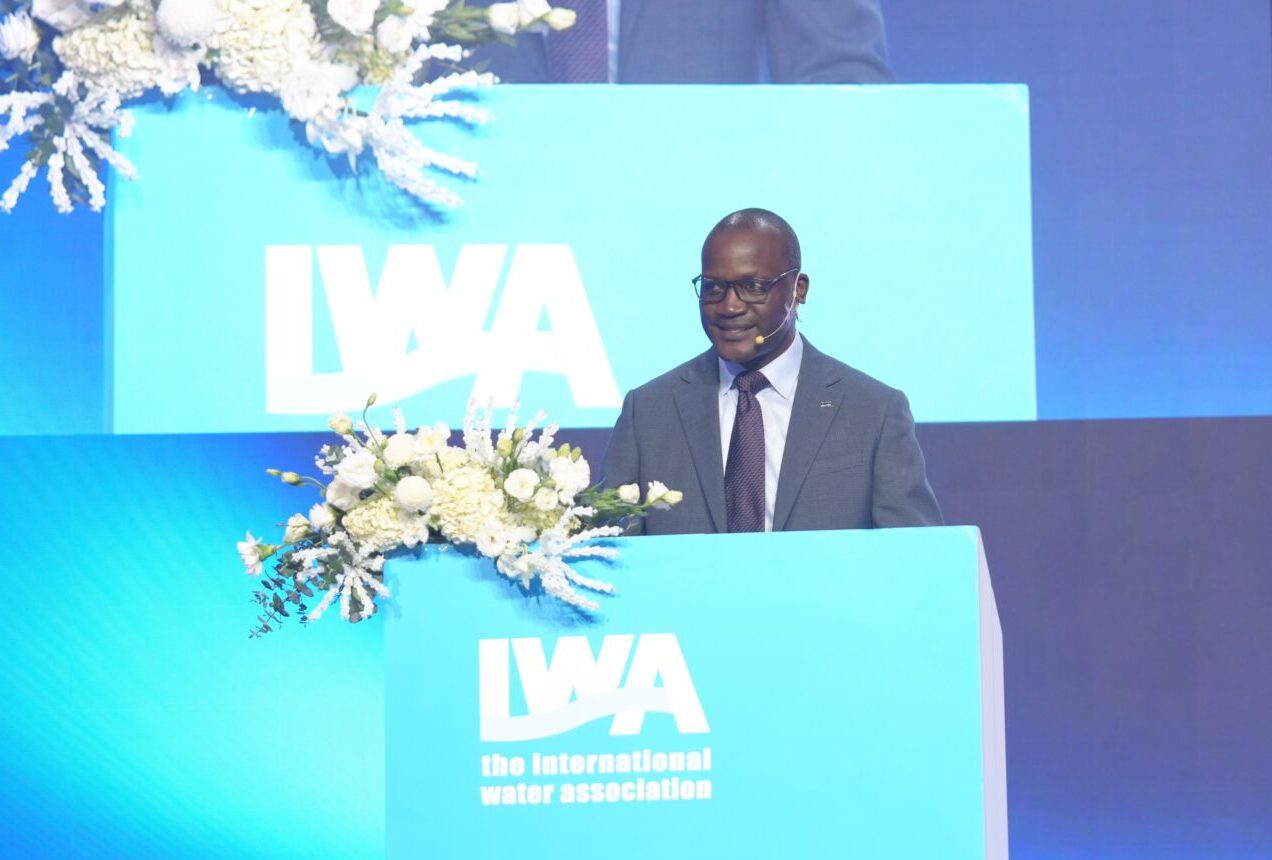
At the upcoming IWA Congress in October, The Workdry Group will explore this question in greater depth, drawing on real-world applications of its mission-critical mobile and modular rental infrastructure and considering what needs to change if agility is to become a deliberate part of water strategy rather than something the sector reaches for only in a crisis. Visit their Business Forum on Tuesday 6th October at 10:30 am.